Andy Jackson
Interview
On the Internet, no one knows you're a dog. Or so goes the expression, coined by a New Yorker cartoon some years back. The circumstances that lead to my interview with Andy Jackson suggest a Floydian twist: "On the Internet, no one knows you're Pink Floyd's recording engineer, either."
The story starts on Oct. 12, 2000, when I received an email message from the founder of a new business in the U.K. "I've set up a new record label, Tube Records, featuring Floyd related things," read the message. It continued to explain that "Obvious," an album by longtime Floyd engineer Andy Jackson, was a centerpiece of the label's offerings. I replied I'd be happy to review a copy of the CD.
When the disc arrived a couple weeks later, I read through the accompanying press release and was surprised to discover the person who had queried me had been Jackson himself, operating under a pseudonym.
"I just like the freedom that a mask gives," he wrote, when I asked him to confirm his identity. The pseudonym, he added, "provided a very comfortable place from which to do the 'selling' thing."
After researching Jackson's background — his tenure with the Floyd goes back 20 years —I suggested an interview. We set the date of Sunday, Dec. 17, for a transatlantic phone conversation: Jackson sat in his home studio, in the suburbs of London, England; I was at my kitchen table in Winooski, Vt.
This interview was broadcast on consecutive "Floydian Slip" programs on Sunday, Jan. 14 and 21, 2001. We have provided complete transcripts for Part I and Part II, below. — Craig Bailey
Addendum: Tuberecords.com, the Web site mentioned in this interview, no longer belongs to Jackson. (Nov. 26, 2004)
Part I
Floydian Slip (FS): Recording engineer Andy Jackson has worked with Pink Floyd in the studio and out on the road for more than two decades. His work with Floyd has earned him two Grammy nominations. He's also been involved with Roger Waters and David Gilmour solo projects. We welcome Andy Jackson to "Floydian Slip" program number #268. Thanks for joining us.
Andy Jackson (AJ): My pleasure.
FS: I want to talk about the first project you did with the Floyd, which I guess was engineering the music for the "Pink Floyd The Wall" film. Is that true?
AJ: Yeah.
FS: How did that job come about?
AJ: Well, it was from James Guthrie who had done "The Wall" album. I had originally trained with him when I was just a young assistant engineer. He was the engineer I trained under. He had left and gone and worked with the Floyd doing "The Wall." And it was just a case that he needed extra bodies and I was an obvious choice having worked with him for a few years beforehand. So I got brought in, originally, to record some of the live shows and then to work on the movie.
FS: So up to that point what kind of work had you been doing?
AJ: I was a jobbing studio engineer, just working for a studio in London doing whatever came in, really. So, I mean, a lot of pop music and all sorts of things. It was the height of disco as well ...
FS: So you worked on a lot of disco albums?
AJ: (Laughs) Well, not a lot, but enough!
FS: Would there be anything we would recognize, I mean, as far as artists go, that you worked on?
AJ: Heatwave ("Boogie Nights") were the ones, I suppose, that were big — that made it big on your side to some extent.
FS: Had you ever worked for a band that was as huge as Pink Floyd?
AJ: No, no — nothing like that, really.
FS: How familiar were you with the band when you first started ... So, technically, the first work that you did for them was doing the live shows for "The Wall."
AJ: Yeah. I wasn't doing the live shows as such. It was recording ... Well, actually, some of the stuff that just turned up on "Is There Anybody Out There?" Those shows. It was those shows in London in 1980. I just gave a hand with doing the recording track, really, at that stage, because James was mixing the show, so he couldn't do it. So it was just the obvious choice thing for getting me involved in that.
FS: Then the soundtrack work came after that.
AJ: Yup. Then, again, it was just a matter of there was just such a large physical workload of stuff to do to accomplish that film. He needed someone else involved, so I got involved in that stage. Initially it was just doing bits and pieces, but as time went on and there was more and more to do I got more and more involved in some of the recording. Because we recut some songs for the movie. I can't remember exactly which ones. There were three or four songs that were recut for the film. So there were whole songs to build and things like that.
FS: Would you say the bulk of your work on that was sort of taking what was recorded for the album and reworking it to fit into the film?
AJ: Essentially, yeah. I mean, that was the project — was to remix for the theatre, for the cinema, because it's a different format. We tried just playing the tracks in the cinema; it didn't really work very well. So it was decided then to start from scratch. Which was ... You know, it was a lot of music. There's a lot to do. So we remixed the songs for the movie.
FS: Is it more difficult doing that type of work than just sitting down and cutting an album?
AJ: There's different problems involved. Because with movie you're dealing with a rather sort of average situation. You have to be able to play in theaters which maybe haven't updated their equipment for 40 years, or something like that. So there isn't any degree of excellence involved in stuff ... (Laughs) I'm sure cinema people are going to hate me for this, but, back then particularly, you had to be able to cater for not very good stuff. So we, in some ways, we were having to mix it from behind the curtains ...
FS: ... Take it down to the lowest common denominator, in a sense.
AJ: Yeah, to some extent. And to try to achieve the highest degree of excellence within that. And we were certainly doing things which at the time hadn't been done before. Taking stuff from our world — the studio world — into the cinema world, which hadn't been done. It's much more commonplace now. And, in fact, they've got much more high-tech in cinema. But, at the time, it was pretty low-tech and we had been doing stuff that had never been done. Pushing the envelope.
FS: Were you at all involved with the DVD of "The Wall" that came out recently?
AJ: No, no. That was nothing to do with me at all. James now lives in California. He is English, but he lives in California now. And he seems to be doing the archival stuff. Things that are coming out, going back over things. It's very much his thing, and he sits in his studio month after month doing this stuff. He just did Roger Waters' live album ("In the Flesh"). Same sort of thing. Just working on that, on his own, really.
FS: "The Wall" album, as I understand it was recorded in a few different studios across the globe. Where did you do the work for the film?
AJ: The film was, essentially, all done in a film studio in London — Pinewood Studios. We just encamped in there for about four or five months — I know it was something like that.
FS: How closely did you work with the band? You said you only re-recorded, what, like three or four tracks.
AJ: Yeah.
FS: So was there was lot of interface with the band?
AJ: Varying. Roger was, as ever, very, very involved in everything. So he he'd always, certainly all throughout the dub, he was in all the time. You know, putting his opinions about what should be done. I mean, as he does. He's never one to take a backseat.
FS: He has, I guess, sort of a reputation as a perfectionist. Is he a difficult person to work for?
AJ: Yeah, he's a hard taskmaster. I mean, I've also got a great deal of professional respect for Roger. I mean, I think he's very, very clever. Actually, they're all very clever. It should be said. I mean, that's one thing about this band that in some ways puts them apart from the majority: They're all very clever people. Roger has a particular talent for the big picture, the vision, of the whole thing. And it does mean, at times, he's got no fear about coming in and saying, "Well, that's no good. It's got to go." Even though it may have taken days and days of work. He'll just through it away unceremoniously. He's got no fear of that at all. (Laughs) And that's quite disconcerting when you first start working with him! When you think, "God, what can we do that's right, here?" But on the other hand it also, I think, teaches you to be right about these things and to follow ... You know, if you feel that something is not right, just because you've invested time and energy in it doesn't mean you should keep it, or anything like that. He's very good about stripping things back and getting what's important. Particularly if you do listen to things like "The Wall." A lot of the time, there's very little happening — at any one time. It's really stripped back to the important elements and there's no padding and no filler and nothing to disguise those important things. It's just the pure thing. He's cut it back to the essence. And he's very good like that. Working on the movie was hard. Again, that's kind of quite well documented. There were three people all trying in some ways to have their hand on the tiller: Roger; Alan Parker, the director, tremendously well-known had some great achievements and made some great films; and Gerald Scarfe, who was directing all the animation and things like that. And in some ways they were all trying to have their hand on the tiller. Roger and Gerald tended to form a team because they'd been working together for a while. But there were well-publicized difficulties working between Roger and Alan. I think maybe it's one of those situations where the difficulties made a better product than otherwise would have been, because one person would pick up on something they didn't think was good and they'd pursue the point even though other people were saying, "No, it's fine, it's fine." So maybe it led to it actually being better than it would have been otherwise.
FS: At some point there were plans to release a soundtrack to the film. In fact, even the credits of the movie, I think, talk about a soundtrack, but that never happened. Why was that?
AJ: Well, that's actually — I can't say in detail, because I don't know — but, I mean, it's essentially contractual. Originally it was believed there was a contractual reason to make a soundtrack album. Which seemed — it was going to be a bit odd, because there was not that much to put on it ... There was the handful of songs we'd done again. And apart from that it would be the album. It was going to be a bit odd. So this actually led the idea of what was called tentatively at the time, "Spare Bricks." Which were, if you like, songs which could have been on "The Wall," but weren't. So the idea was to write more songs around those themes, lyrically, and maybe around some of the musical themes. That did get started. And that's actually what in the end became "(The) Final Cut." Once it became apparent there was no need to make a soundtrack album, we'd already started work on some new material, and that's what led to "The Final Cut," which flowed, the process of making it flowed completely seamlessly out of doing the movie. It was almost part of the same thing, really.
FS: I want to talk about "The Final Cut" in a minute, but we wanted to play a track from the film version of "The Wall." You suggested earlier one of the numbers that was re-recorded for the soundtrack: "In the Flesh" with vocals by Bob Geldolf, who played Pink in the movie. Why'd you pick that one?
AJ: Well, firstly, it's one of the tracks that's different. And, also, it's just a personal thing. I very rarely saw any of the filming, because that was not the side I was involved in, but I did actually go to that one. They hired a large hall in London and made this whole huge neo-Nazi rally, and I went to the filming of it. In order to get people to look right — who looked like they could kind of be neo-Nazi folks they found a bunch of genuine neo-Nazi folks. So it's a bunch of fairly dodgy guys were the extras in the film! And also because I know Bob from before. I'd actually worked — That was my claim to fame before I'd worked with Floyd, is that I'd mixed "I Don't Like Mondays," which was my first number one ...
FS: Oh, sure ...
AJ: ... Yeah. So that's as far as I make make any sort of great story about that thing. It's just something I remember — was going and watching that being filmed.
FS: When Bob was in the studio recording that, did he have any trepidation in stepping into Roger's shoes. Roger sang that on the album.
AJ: Yeah. Well, again, quite famously, (laughs) Bob had been very scathing about Pink Floyd. I mean, come from the sort of new wave of English — well, it's not really punk and he's not really English, he's Irish — but kind of throwing away a lot of this kind of dislike for a lot of the large bands of the time that had come around in the '70s. And Bob was quite scornful about Pink Floyd. So it was sort of a strange irony for him to end up doing this. And Bob's a very strong character, so I don't think he was worried about it in that way. He very much wanted to put his own interpretation on it. In fact, I remember, he was very much pushing all the time that it should be more over the top. You know, this guy was crazy at this point. And it should be an insane rant rather than him trying to sing it. And indeed it is.
FS: Bob Geldolf with "In the Flesh" from the soundtrack to the film "Pink Floyd The Wall" — as we talk with Floyd recording engineer Andy Jackson on "Floydian Slip."
(Song: "In the Flesh")
FS: Broadcasting from the dark side of the moon, this is "Floydian Slip." "In the Flesh" there, sung by Bob Geldolf, as it appears on the movie "Pink Floyd The Wall." It sounds like he's shredding his voice in the beginning of that number.
AJ: Yeah! Absolutely. (Laughs) There was no restraint there whatsoever.
FS: Was Roger Waters in the studio when Bob was recording that?
AJ: Oh, yeah. Absolutely, yes. And between them, pushing each other along about pushing it further and further and further. It was quite an interesting experience, really.
FS: Our guest throughout this week's program is longtime Floyd collaborator Andy Jackson, who's speaking to us from London, England. We'll talk about the making of "The Final Cut" album next.
(Commercial break)
FS: We're talking with Pink Floyd recording engineer Andy Jackson throughout this week's "Floydian Slip"; I'm Craig Bailey. Floyd's next album after "The Wall" was "The Final Cut." That was the band's last album with Roger Waters. A lot's been written about how the band was all but defunct at that point. You were there; what was the atmosphere like in the studio among the band members?
AJ: Well, it was somewhat ... As has happened many, many times with a lot of large bands, it was an album done largely with only one person at a time. They were very rarely working together. In fact, we tended to be working in several locations at once, and would split up. James was still involved and I was working on it as well, and we'd literally have one each —Dave and Roger — I tended to go to Roger's and work with him on vocals and things and James would go to Dave's —both had studios at home —and work on guitars. (Laughs) And we'd occasionally meet up again and swap what we'd done!
FS: I think that'd be a tough way to make an album.
AJ: Well, from the outside, it would sound so. But it's actually not all that odd. The majority of time the majority of records are made one person at a time even though other people are there. Most things are actually done that way, really. It's not that odd. The relationship was definitely frosty by that stage — there's no question about it. I don't think anyone would want to deny that. So the time that Dave — Dave in particular — and Roger were in the studio together, it was frosty. There's no question about it.
FS: Was there a sense among people such as yourself —engineers, producers —that this was the last time that you'd be working on a Pink Floyd album?
AJ: No, not for me. Not at all. I mean, as far as I didn't have quite as much background as James, for example, having not done "The Wall" album. But I didn't really have that much to compare it to, having come in when I did. The process I'd been through was fairly disparate anyway — the process I'd been involved in. So there really wasn't that much to really compare it to. I didn't have the knowledge of any rosy past to compare it to.
FS: Well, from adversity comes great art, I guess. You'd suggested we play "The Gunner's Dream" from "The Final Cut." You told me during the break it was one of your favorite numbers. You also said there was an interesting story behind that one.
AJ: Silly little story, really: There's a line in it, "Good-bye, Max; good-bye, Ma. After the service, when you're walking to the car." Originally is was "Good-bye, Ma; good-bye, Pa," etc. Now the various people working on the album, if you lock enough people in a room for long enough they start to sort of get silly. And we all had nicknames for each other. I was Luis; Michael Kamen was Spike; and Max was James Guthrie. And Roger's very sharp and anything that's going down, he'll pick up on. And he said, "I know, record this." And he went out into the studio and sang, "Good-bye, Max; good-bye, Spike. After the service when you're walking to your bike." You know, just as a joke for the assembled audience —us guys. But he obviously liked it. There was something he really liked about it. He loved the Max thing. And so Max became the lyric and he invented this little character called Max who was just this imaginary guy who had been a serviceman with the storyteller. It reoccurs in the album somewhere else — a bit about playing snooker. "Tell you what, Max" or something — just a bit of spoken dialog. Max turns up again. So there you go, yeah, in reality Max is James Guthrie.
FS: "The Gunner's Dream" from Pink Floyd's "The Final Cut" on "Floydian Slip."
(Song: "The Gunner's Dream")
(Song: "Not Now John")
FS: Where the final cut is just beginning: This is "Floydian Slip"; I'm Craig Bailey. A couple of "The Final Cut," there. We're talking with Pink Floyd recording engineer Andy Jackson. What's it like for you to hear a number like so many years later. "The Final Cut" is going on 20 years old. Do you think of the day it was recorded, the day it was mixed, what the weather was doing ...?
AJ: Well, that's too long ago now; I've forgotten it. But, yes, I do in general. A lot of people would probably say the same: The stuff that you work on is very difficult to listen to without it being the process still and without one being self-critical and thinking, I could have, you know, that bit of guitar I could have got better of whatever.
FS: You can never really step away from it and look at it objectively.
AJ: I tend to put it away for a couple of years (laughs) and then listen to it! Particularly any of the Floyd projects tended to be rather long. So if you've been working on something for a year, it's kind of like, I find it very, very difficult to listen to it and not be involved professional in it. I still it difficult, frankly ... I'm not saying I can't listen to it because I hate it. I'm just saying if listen to it, I'm still somewhat involved in the process. Things like "The Final Cut" are getting old enough now that it's kind of drifting away (laughs) and I can begin to listen to it like everyone else listens to it.
FS: You spent a year working on "The Final Cut?"
AJ: "The Final Cut" wasn't that long; some of the others were. I can't remember. "The Final Cut" was an oddity because of the way it metamorphosized from the film and some of the process was all joined up. It was very difficult to even say when we quite started it.
FS: After "The Final Cut," Roger went on to make "The Pros and Cons of Hitch Hiking." David Gilmour started working on his second solo album, which was "About Face." Now you engineered both of those.
AJ: Well, I didn't do all of "About Face." I did the first month of "About Face," and I did all of "Pros and Cons."
FS: So were you working on those projects at the same time?
AJ: Well, "Pros and Cons" did take a year. But, because they've got kids, they tend to take all the school holidays off. So there was a long summer vacation. We took whatever —best part of two months out. And that happened to be when Dave was doing his solo album, so it worked out very neatly for me. I went from one and did the other and then went back onto Roger again.
FS: Now, both of them, I'm guessing, knew you were working on the other's project.
AJ: Yeah, at this point there was certainly ... I mean, Roger certainly wasn't saying at this point that it was over, as far as he was concerned. That had obviously not crystallized in his mind. Or he was not acting on it at that point. I'm sure the groundwork was there. But I was unaware of this, put it that way.
FS: So they weren't asking you about the other's project.
AJ: No, I mean, there was vague interest to hear things. But ...
FS: I would think that an album like "Pros and Cons" would be more difficult to make — there's so many songs that blend into the next, there's ambient sounds ...
AJ: Yeah. Well, it was made that way as well. It isn't even constructed afterwards. It was ... We spent a long time making a mockup of the whole thing. Until the shape was fixed. And then we made the album. And it was made, these huge, great big lumps all joined up .. It effectively took 15-minute songs —large lumps of the whole song, sort of thing all joined up. (Laughs) It was hellishly complicated, in fact, is what it was! I had to, for the first time, keep notes of where everything is so ... what instruments turn up where and things like that. But I had to actually do it like it was a film cue sheet and divide it up by time as well. So I knew that at 12 minutes such and such happened. You know, and that guitar there came in there on that bit. It was almost like a year planner rather than anything else.
FS: What kind of a studio are you using? How many tracks are you keeping track of? — and all that stuff?
AJ: Back then it was what would now be called 48-track, but it wasn't for us, strictly speaking. It's two machines linked together, which was ... it was pretty standard working practice back then — pre-digital days this is so it's analog tape.
FS: I think we all have a vague notion of what engineer does, but for anyone who doesn't: What do you do?
AJ: Well, it is a little bit of a gray area. I mean, in terms of where exactly the finish line is — where the stop line. Essentially, it's, what I refer to my kid as, is knobs and buttons. Choose microphones, put them up, choose where they go, choose how you treat them. It is all the knobs and buttons stuff. But exactly the process of choice involved in that, also depends on other people. So in some situations you pretty well have card blanche to do what you like, what you think is appropriate. And other situations you'll be doing it for somebody else's benefit: a producer or an artist will want a particular thing. Whether they articulate it in such and such a microphone or such and such a thing. Or they just describe it as they just want the sound of a giant marshmallow falling down a cliff — and you have to work out what on earth that means! So it's a little bit of a gray area. Essentially it's a technical job with a huge amount of artistic interpretation added to how you use it really.
FS: When you're doing a project, who are you the employee of? The producer? Or the band?
AJ: Well, whoever pays the bill, really. In terms of Pink Floyd it's them, because they actually self-finance. For most people, it's the record company.
FS: But not so with Floyd.
AJ: No. With Floyd, and I'm sure with other large bands, they become self-sufficient and they do as they please, really.
FS: We need to take a break. We'll be back for more with Pink Floyd engineer Andy Jackson on this week's "Floydian Slip."
(Commercial break)
FS: Andy Jackson, sound engineer who's worked with Pink Floyd for more than 20 years, is our guest on this week's "Floydian Slip." I'm Craig Bailey. You went on the road with Roger Waters after "The Pros and Cons of Hitch Hiking."
AJ: Yeah.
FS: ... Had you done a lot of touring with other groups?
AJ: Never. I had never mixed a gig in my life. Not even, you know, my friends down at the nasty little club kind of thing. (Laughs) I had never done a live show in my life. And I got completely thrown into the deep end and, as ever with that show, was pretty well as complicated as a Floyd show — it wasn't quite as complicated as "The Wall" — but it was, technically, a tremendously complicated show. And, inevitably, nobody felt we had enough time for rehearsal. We felt very under rehearsed when we started, in terms of technically under rehearsed. And it was (laughs) terrifying! And I mixed my first show ever in front of 16,000 people. It was like, "Oh, my God! I better not go wrong." And of course it never does; the first night is always fine because everyone's so wound up (laughs); they're kind of running at double speed. About the third or fourth night is when the disasters happen, because everyone starts to relax.
FS: I would think touring would be much more grueling that work in a studio. Is it apples and oranges here?
AJ: Yeah, well it is a bit. I mean, it can be a long day. It depends on what you do. If you're a regular member of the crew, there's a lot of stuff to do and a lot of physical stuff and getting dirty and things like that. If you manage to be lucky and sort of work for the band and things like that you get treated rather better and you don't have to do that stuff. You just turn up and do the show — which certainly was the case when I've done stuff more recently. I like ... that two and a half hours of actually doing the show is my favorite thing of all of doing the job; I love it. I love the fact that ... you know, the adrenaline, you just do it. If something bad happens, it's gone and it's gone forever and there's no record of it and it's just the way it was. And if it was great, it's gone as well. You just enjoy it. I love the kind of freedom of it.
FS: Unless you're recording the show, of course.
AJ: Unless you're recording the show, of course. I mean, but even, my part in it —it's not going to be my mix that's used on a live album. So I thoroughly enjoy it. The other, whatever it is, 21 and a half hours of the day, are fairly dull. People think it's terribly exciting, the idea of big rock and roll shows. But, actually, it's just another hotel that looks like the last one and another bit of traveling that's just like the last one and getting very bored most the time! (laughs)
FS: You also toured with Floyd in the mid-'90s. What are these guys like when they're out on the road?
AJ: Well, by the time we got to the more recent stuff, the '94 tour, everyone ...
FS: That was after "The Division Bell."
AJ: ... Yeah. Everyone had their kids with them! So it was very un-rock and roll, really. As it happens, all three ... No, Rick didn't have a new kid by then; he's got a new kid now. But all three of them were in relatively comparatively recent marriages and they've got youngish kids. So it was very much they were just traveling ... they were little family groups and they were doing their own thing, so most of the time we didn't actually see the Floyd guys per se. We saw all the other guys — the other musicians and things like that to hang around with them.
FS: Not exactly your stereotypical image of the rock and rollers who party until three in the morning and stuff like that.
AJ: No, not at all. No, not in the slightest. It was more get up early and go look at an art gallery kind of tour. Which actually is great. I actually know some of the towns I went to and I can remember them! Rather than it being, as you say, a haze of parties.
FS: I seem to remember reading back, even in the early days, that on tour Roger would bring his golf clubs with him, apparently, because he was a big golfer.
AJ: Yeah. Yeah, yeah, absolutely.
FS: We want to play a number from Roger Waters' "The Pros and Cons of Hitch Hiking." We're kind of letting you do the picking and choosing this week. Earlier you'd suggested "Go Fishing."
AJ: It's, for me, it's the best song on the album. I think there's a lot of outstanding on it. A lot of playing is really very good: Eric Clapton's playing is marvelous. And Andy Newmark plays particularly well on that one for me, the drummer. It's a fantastic orchestral arrangement from Michael Kamen. And I just think it combines the being an exceptionally good song. I also just remember very clearly, Roger writes lyrics right to the end. He hones and hones and hones the lyrics.
FS: In the studio?
AJ: Well, no, he'll do it between times. We'll work and we'll finish —we don't work late —we finish relatively early. And then he'll work by himself on lyrics and come in the next day with revisions and changes and things. And he just keeps going at it. And he keeps honing and honing and honing. And he'll just come in and there's just one line change. He just gets it better and better. He works very, very hard at the lyrics. But this was, I just remember something very extraordinary — which was him going out having not really written the lyrics for this and improvising the lyrics. And quite a few of them stayed. There are lines in this song which he just improvised one day, which is just an extraordinary thing to witness. Somebody going and doing that. Just improvising lyrics. It's stayed with me ever since. And it has a particular affection for it.
FS: Pink Floyd recording engineer Andy Jackson's our guest on this week's show. Let's listen to some of his work: "Go Fishing" from Roger Waters' "The Pros and Cons of Hitch Hiking," with, as we learned on this week's program, partially improvised lyrics. This is "Floydian Slip."
(Song: "Go Fishing")
FS: Broadcasting from the dark side of the moon — this is "Floydian Slip," the Pink Floyd experience. "Go Fishing" from Roger Waters' "The Pros and Cons of Hitch Hiking." We're talking with Floyd engineer Andy Jackson. You also did work on David Gilmour's "About Face" album at the same time you were working on "Pros and Cons" for Roger. I'd heard what probably is a rumor about a song on "About Face" called "Murder," which supposedly is about the murder of John Lennon. Is that true?
AJ: It is. That is absolutely true. That is exactly what it's about. So that in itself is reason enough (to play it). For anybody the murder of John Lennon is something that one will never forget. It's one of those ... you know, where were you when JFK was killed, when you heard that JFK was, and where were you when you heard that Lennon was. And, you know, you always remember those things. And I do. I remember exactly where I was when I heard that Lennon had been shot. It seems like a strange little thing: We recorded this album in Paris. I remember a phone call coming through — and it sounds really stupid now — but was that Dave's dog had died. And it was funny. We were working on that song and it was just very, very cussing at that moment. I remember Dave going out after that and playing the guitars at the end of the song and it just ... they really bit. He really really meant it. You know, it was just one of those moments of raw emotion coming through. And, again, it's just a strong memory.
(Song: "Murder")
FS: "Floydian Slip" with David Gilmour's "Murder," from "About Face" — one of many Floydian albums engineered by Andy Jackson our guest on this week's show — joining us from his home studio outside London. We have a lot more we want to talk about, but we're out of time. So we want to continue this talk next week — continuing with your work on "A Momentary Lapse of Reason" and "The Division Bell" as well as an album of your own you've put together called "Obvious." Thanks for joining us.
AJ: It's my pleasure.
FS: Join us for part two of our talk with Andy Jackson on next week's "Floydian Slip," only on the Random Precision Radio Network. I'm Craig Bailey. You can find a complete transcript of this week's program on our Web site: www.floydianslip.com. "Floydian Slip" is a Random Precision Production.
Part II
FS: Your controls are set to the Random Precision Radio Network. This is "Floydian Slip," the Pink Floyd experience; I'm your host, Craig Bailey. This week the second of two special programs, as we spend another hour with longtime Pink Floyd sound engineer Andy Jackson. He's worked with Floyd since 1980, both out on the road and in the studio. He's also had a hand in solo albums from Roger Waters and David Gilmour, and has been nominated for two Grammy awards. Andy Jackson ... welcome, again.
AJ: My pleasure.
FS: Last week we talked about your early work with the band — from the soundtrack of "The Wall" movie, "The Final Cut" and a couple solo projects: Roger's "The Pros and Cons of Hitch Hiking" and David Gilmour's "About Face." That took us up to the mid-'80s. You had some time off between those solo projects and the next Floyd album, which was "A Momentary Lapse of Reason," after Roger had left the band. When did you first hear that David was reuniting with Nick and Rick — later with Rick — to reform Pink Floyd?
AJ: (Laughs) About a week before we started! As very often seems to happen. I got a phone call from Steve O'Rourke, the band's manager just saying, "Are you available? You wanna come and do an album?" Oh, okay — Monday? It was like that! Oh, okay — right.
FS: Did it surprise you? Gee, Pink Floyd is back together without Roger?
AJ: Well, I knew that Roger had gone by then; it was public knowledge. But I had no idea what was going on. I was carrying on with my life doing other things, and I got a phone call and, you know, "Please come and do an album. And, by the way, Dave's got a new studio." Has he? Oh, okay (laughs)!
FS: Is that on a houseboat, or something like that?
AJ: Yeah. And it's ...
FS: What are these guys like in the studio? Last week we were talking about the romanticized image of a band on tour. I guess there's a romanticized image of in the studio — that it's, you know, recording until 4 in the morning. It's musicians strung out on no sleep and ashtrays full of cigarette butts. Is it anything like that? Or is that just ...
AJ: Well, again, not anymore. We're all too long in the tooth for that, really. We're not going to do that. No, we work office hours, approximately. Miss the morning traffic, work until 7 or something and knock off. Which is great. If you're going to spend an incredibly long time on a project you can't do 80 hours a week — you'll die. You can do 80 hours a week for a short time. A lot of people attempted to do that. I always find it very anti productive working those sort of things. I just think you get too tired to make decent decisions. And we don't. We don't do that. It's very much treated at a pace that is sustainable. So we're work 10 'til 7, Monday to Friday. And have the weekend off and take the school vacations off as well. (Laughs) So it's absolutely not like anyone would imagine at all! And it's all very civilized, really.
FS: I seem to remember rumors when the album — and maybe they're not rumors, I don't know — when the album was being put together or shortly before it was released that the band supposedly had scrapped a lot of work that it had done early on to get a fresh start? That there were concerns either within the band or with the record label that the first attempts weren't Pink Floyd-esque enough ...
AJ: No, I mean that's ... As with any album, there'll be 25 songs written and you use eight or 10 of them, but that's true for everybody. You know? And it's no different, there's no question ... Records companies weren't involved, really. I mean, a band like Pink Floyd are big enough that they don't have to answer to the record company. The record company take what they're given. And they're grateful. They're not beholden to the mighty powers at Sony or anything else.
FS: I think that it would be such a bizarre situation in a sense with the amount of money that's at stake that there would just be a ... I would think that it would not be conducive to creating good art. When the concept is, "Gee, what we're creating is going to generate millions of dollars of revenue." Not just for us, but for other people. I would just think there would be so many people pulling at you to do this, that or the other thing.
AJ: Yeah, but, I mean, who's best at being Pink Floyd? Pink Floyd or the people from Sony Records? They're proved their point. You know? They don't have to answer to anyone, really. The same for whoever — McCartney or the Stones or Aerosmith or whoever. I'm sure they don't have to answer to anyone. They can do what they like.
FS: Your credit on "Momentary Lapse" also includes "Additional sound effects." What's that all about?
AJ: Oh, it's just things like the boat rowing and stuff like that.
FS: You went out and recorded all that stuff?
AJ: Yeah. It was, literally, just making ...
FS: Did they tell you, "Gee, we need somebody rowing a boat?" Or did they just ...
AJ: Yup. Yeah, it was just conversations about putting the album together amongst the working group. "Well, we should do this." I mean, we were working on the river. The studio's in a houseboat. It was very, very attached to what we were doing, so it was on obvious thing to do. I think, frankly, it was just me being credited specifically with that was more just Dave being nice. Saying nice things about me. (Laughs) Thank you very much!
FS: Whenever I see an interview with David Gilmour I'm also taken by how soft-spoken he seems to be. Because his singing voice is kind of a gravelly, ballsy kind of ... and he has kind of a real soft kind of ...
AJ: Absolutely.
FS: "One Slip" was one of the singles from "Momentary Lapse" ...
AJ: Yeah, I was looking at this album trying to think of any particular track that had any particular story attached to it that was relevant to me. And the fact is, there isn't anything particularly strong about any of them. I'm not saying they're not good songs, but none of them have a particularly personal thing. And, frankly, it's a completely silly reason on this one, is the alarms on the front, which was me with the alarm system at the studio. (Laughs) The sound of those things, overtime I play it ... Anyone who has to deal with burglar alarms will know that the sound of the burglar alarm going off is a nightmare sound in your mind. Strangely enough I had a friend who worked in another studio and they had exactly the same alarm system. And he said, "Oh, God that sound! I can't believe you used that!"
FS: (Laughs) So that's actually the alarm on the houseboat.
AJ: Yeah, it is, yeah. It was me putting the wrong code number in to set it off.
(Song: "One Slip")
(Song: "Learning to Fly")
FS: "Floydian Slip" on the Random Precision Radio Network. A couple from "A Momentary Lapse of Reason" there. "Learning to Fly." Before that, "One Slip," with the sound of the burglar alarm at David Gilmour's houseboat studio at the beginning. Is that sort of thing something that you came up with on your own? And you taped it and you brought it to them and you said, "Hey, check this out?"
AJ: Most of this stuff would come from Dave or Bob Ezrin, really. I mean, it's difficult to say all the time exactly what you ... where what I did ... Because it's conversations that they come from. So maybe you could try and find who said the original spark, but it's very difficult to exactly put it down. I guess it's just a loose reference to the record content, really. The idea of alarm bells, really, I suppose is the idea of, you know, be careful; something going wrong — has some connection with the lyrical content of the song.
FS: "A Momentary Lapse of Reason" was the first Floyd album to be recorded digitally. Is that true?
AJ: Yeah, well it was part and part — part digital and part analog.
FS: How'd that change things for you?
AJ: Frankly, not much, really. It was done an a digital tape machine. So it was essentially the same process. It's not like modern, nonlinear editable kinds of things. It's the same thing. It was just done for sound quality really — for the idea of sound quality. Curiously enough, we have since gone back to working entirely analog.
FS: Really.
AJ: "The Division Bell" was done analog, yeah.
FS: Why was that?
AJ: Because we like it. The sound's better.
FS: You really do. You hear a difference?
AJ: Yeah. Well, it matters to us. We care. Even if nobody else does! (Laughs)
FS: We'll talk more about Pink Floyd's "The Division Bell" album in a moment. Our guest on this week's "Floydian Slip" — Floyd recording engineer Andy Jackson.
(Commercial break)
FS: Broadcasting from the dark side of the moon, this is "Floydian Slip," the Pink Floyd experience; I'm Craig Bailey. We're talking this week with Floyd recording engineer Andy Jackson, from his home studio outside London. When did work on "The Division Bell" begin for you?
AJ: Well, I knew ... I mean, I got the call that they're going to be working. And I guess there was the sense that there was a certain interconnectedness that had gone missing. So it started off with two weeks' with the three of them plus Guy Pratt on bass jamming. And I went down just to kind of hang out with them a couple of times. And, literally, they were just jamming and we just recorded the jams. Or they recorded the jams. Dave just had a machine out next to where he was playing and he just hit record if anything good was happening. And we just ended up with a big pile of tape of jams.
FS: And from that kind of boil it down to ...
AJ: Yeah. And just culled through them and said, "Well, this is a good one; let's develop this one. How about putting this one with that one?" Just started working like that. So there was much more involvement as a band rather than a songwriter bringing a song in and then it being done.
FS: How did the atmosphere in the studio for that album compare to "Momentary Lapse?" Was the band a little more settled now that it ...
AJ: Oh, yeah. It was ...the whole process of "The Division Bell" was an infinitely better process than "Momentary Lapse." It felt like a proper Pink Floyd album again to everybody involved. It felt like ... It was good to have Rick back properly, as well.
FS: For me, I hear the album and I hear ... Personally, I like it better than "A Momentary Lapse of Reason," because I guess I like the synthesized, trippier kind of Floyd more than the guitar-based. And I hear more synth in "The Division Bell" than in "Momentary Lapse."
AJ: Yeah, absolutely. Well, Rick was much more involved. I mean you can see from the writing credits. Quite a lot of them were ... Well, quite a lot of them came from James and they were Rick's ideas or Rick's sequences and things like that. Rick was much more involved. As was Nick as well. And it's funny there's very much ... There's a tremendous amount of public focus on Dave and on Roger as being the significant members. And the more I've worked with this band, the more I've realized how important Rick and Nick are — in terms of, if somebody else plays on those albums, it just isn't them. It doesn't sound like them. In particularly Nick, I mean, the way he ... Well, both of them. They both have a particular way of playing. They just ... And it's not necessarily that it's good, bad, or indifferent or blue or green or anything else. It's just the way they play. And, I mean, we've got 30-odd years of Pink Floyd and if you change one of the major ingredients, it doesn't gel in the same way. Nick's playing's very important. The way he plays is very understated. And it allows the gentleness — that in some ways has made Pink Floyd such a great band, because it allows them, for the other stuff, to be important. For the melodies and the other instrumental stuff to be important, without it being rhythmically dominated. And a lot of that is just about how Nick plays. He has a very gentle approach to playing.
FS: There was a track or two on "The Final Cut" that Nick didn't play on.
AJ: On "The Final Cut" there's one track ...
FS: One track. Which one is that?
AJ: "Two Suns." It was the tricky time signature one. It's ...
FS: "Two Suns in the Sunset." The one at the very end.
AJ: Yeah. Who is it? It's Andy Newmark, isn't it? It's Andy Newmark on that one, yeah.
FS: "Marooned" is an instrumental from "The Division Bell" you suggested we play. In fact, I think that one won a Grammy for best rock instrumental.
AJ: Yeah, something. Yeah, they did. They won ... First Grammy they ever won, actually, bizarrely enough.
FS: Is that the only Grammy they've ever won?
AJ: The band have ever won, strangely enough. There've been ... James won a Grammy for his work on "The Wall."
FS: You've been ...
AJ: And I got nominated both times on the two that I did without ...
FS: What were you nominated for?
AJ: "Division Bell" and "Momentary Lapse" for best engineer. I managed to not win either of them, but the way I look at it, at the worst, I came in fifth. Which is, you know, pretty good, really! Oh yes, I would have loved to have won, of course, but there we go! Can't have everything.
FS: What about "Marooned?"
AJ: Yeah, "Marooned." Again, I love it. To pick an instrumental is a bit odd, but I just really like it. Dave played a storm on it. Fantastic. And the vast bulk of what you hear is just a performance, which is always nice. How much it shows to other people, I don't know, but for me to know that it's basically that is, he just played that in one go, basically.
FS: One take.
AJ: Yeah. It's very, very gratifying. And a silly little story: When we first started collecting the jam material together we divided it up into three categories, which we acoustic, blues and cosmic. And bits we glued together we called clusters. And the instrumentals, because they never had any reason to take on a new title, they just stayed with their old titles for a long time. And, in fact, "Cluster One" was always "Cluster One," and it just stuck — which was partly my doing. I always, I told Dave everyday of my love of titles, just to wear him out (laughs). And so he stuck with it. And I managed to get that one. And I didn't manage to get "Marooned," which was originally called "Cosmic 13." So there you go.
FS: "Cosmic 13."
AJ: "Cosmic 13," which I always loved as a title, but I didn't ... I couldn't win that one! But there you go so ...
FS: Let's here "Marooned," or, if you'd rather, "Cosmic 13," from Pink Floyd's "The Division Bell" on "Floydian Slip."
(Song: "Marooned")
(Song: "Cluster One")
FS: Peering into the saucerful of secrets every Sunday night: This is "Floydian Slip," the Pink Floyd experience. A couple from "The Division Bell": "Cluster One," and "Marooned" before that. What are we hearing when we're listening to "Cluster One?"
AJ: The sounds at the beginning ...
FS: Yeah.
AJ: ... That was Bob Ezrin, posted a note on the message board on the Net or CompuServe, I think it was back then, because it was rather early Net days, saying "Anybody got any space noises?" And somebody wrote back! This guy who goes and stands on the top of Mount Washington, I think, in thunder storms holding this great big metal antennae! (Laughs) Recording the electromagnetic stuff! And it is the sound of electromagnetic noise from the solar wind. I mean, it just sounds like a lot of crackles to me and you. But that's what it is. It's electromagnetic noise from the solar wind. So it's a genuine piece of space noise. As near as you can get. So it's a strange guy standing on the top of Mount Washington or somewhere.
FS: Pink Floyd sound engineer Andy Jackson's our guest on this week's "Floydian Slip." More in a minute.
(Commercial break)
FS: Back for more with Pink Floyd engineer Andy Jackson joining us from London on this week's "Floydian Slip." I'm Craig Bailey. You've worked with Floyd for more than 20 years, as well as other bands. But you've just recently put together an album of your own called "Obvious." Is that the name of the band or of the album or both?
AJ: Well, both, I suppose. (Laughs) I kind of realized afterwards, I suppose I ought to make it clearer, but, yeah, it was both ...
FS: Both.
AJ: ... I suppose.
FS: It's a self-titled album. You list a half dozen or so vocalists and musicians in the liner notes. I'm unclear: Do you also perform on the CD? Or did you ...
AJ: Yeah, absolutely. I mean, most of the playing is me. All the guitars and the keyboards are me and most of the bass is me. I just got people to do the bits I can't do. (Laughs) I can't sing and I can't play drums, basically.
FS: Did you also write the songs?
AJ: I co-wrote them with a friend who's not on the album.
FS: We should mention that you didn't just put out an album, but you put it out on your own record label.
AJ: Yeah, well one of the reasons is this all started with just messing around with friends doing a bit of music onto a four-track thing and enjoying it and saying, "We should do this. We should do this," kind of thing. And it was because of the Internet. I think, I mean, for years I'd been wanting to do these ... But there's always the thing, "Well I could do some stuff and I could record it, but then what? Then what are you going to do with it?" I can't ... I haven't got the heart to start trying to get a deal on it or any of those other things or trying to make videos or ... Just not interested. Not interested. And it became clear that there was a possibility of releasing it through the Internet. I had no idea what I was taking on when I started. I was just, "Ah, yes, we can release it on the Internet!" And so there was the opportunity. So, okay, let's do this. And I did.
FS: Do you spend a lot of time on the Net? Are you pretty familiar with ...
AJ: I do now, yeah!
FS: You do now!
AJ: I'm in and out of the studio at the moment but when I'm not, I'm basically working on this thing. So, yeah. I seem to spend my entire life on the Net, really.
FS: There's quite a lively Pink Floyd community on the Internet. Do you ever drop into any the Floyd newsgroups or anything like that?
AJ: Yeah, well I've got a few long dialogues going now, email dialogues, with various ... you know, people that I just originally mailed out, "Say, hey, look at this. You might be interested," and have written back. I spend half of every day just writing emails to people and just giving it a chance, really. All sorts of people. People who are in tribute bands and people that are interested. It's quite nice, really. It's like making a whole bunch of new friends in a different world.
FS: Did you record your album at David Gilmour's studio?
AJ: I recorded the drum tracks at Dave's studio ...
FS: And that's Astoria Studios?
AJ: ... Yeah. And I mixed there. And the rest was done at my house, just in my little bedroom studio.
FS: So you have a studio at your home. Where do you live?
AJ: Yeah, I live in the London suburbs.
FS: This is a 7-track CD. You've been making music now in one form or another for many years with Pink Floyd and others, why now? Why did you decide this was the time you wanted to make your own album?
AJ: Well, it was really, I think, this thing of the opportunity was there to actually do something with it. I mean, I could dig up one that I made 15 years ago that's been sitting there ever since — that never did a thing with it. Because we made it — it was a bit more of a band — actually, a couple of the same guys who turn up on the new album, it was a band of friends — And we made the album and, for better or worse, I'm not going to say it was great. But never could do anything with it, really. Didn't manage to get a deal on it and there was no possibility of getting it out to the world at the time of the mid '80s — it just wasn't available.
FS: So it really was the Internet, in a way, that kind of prompted you to ...
AJ: Yeah, well, it was. It was we could actually get this out and do something with it.
FS: Have there been times, working as an engineer on other bands' projects that you wish you had more creative input?
AJ: Oh, absolutely. I mean, it depends on — not with the Floyd, but on other stuff that I work on — I mean, I produce as well, which does give more creative input. But it's still, it just gets to a point where you don't want to do other people's stuff. You want to do your own thing. I'm not claiming to be the greatest musician on earth, but I've got music I wanted to make. And I think, it's for other people to judge, really, but I like what I did. I really like this album. I really enjoy it.
FS: Is it pretty common for people who are engineers and producers to also be musicians?
AJ: Real bad guitarists. That seems to be the rule of thumb. (Laughs)
FS: Tell me about the performers. These are pretty much friends of yours who you've known for some time.
AJ: Yeah, well, Gary Wallis played drums, who was the drums on live with the Floyd. He does all sorts of big name stuff — does Mike and the Mechanics. He's a big name session drummer in Britain. And he just did it for me as a favor, you know? We'd done the last Floyd tour together and we're friends. That's as simple as that. And I have to say, did a wonderful job. And it was astonishing. Because some of these songs are long; they're 7-minute songs and they're quite complicated. And I'd done the arrangements; I'd done the part on the drum machine, and things like that. You know, quite complicated drum machines and parts with a lot of changes. He just listened through to it, made notes, and went out and peeled it off. And it was fabulous. And I could give him instructions like, "Oh, play like Ringo," and he'd play like Ringo. It was a lovely experience, you know, (laughs) to work with a proper professional! Apart from that, it's friends. It's people I've met that I've either worked with in bands, or friends. And Mark, who sings most of the lead vocals, I just know, because he lives around the corner from me. It really is just odd people I know; we're friends and things like that so.
FS: Who would you say are your musical influences? Naturally I was listening to it with sort of an ear to Floydian connections ...
AJ: Yeah, sure.
FS: ... And some of it does have kind of a Pink Floyd sound to me. Some of it, to me, sort of sounds maybe King Crimson-inspired. There's some vocals that remind me of Jethro Tull.
AJ: Oh, really. Well, that's interesting. Well, these are all bands that I've listened to in my time. There's no doubt about it. And, you know, still do. Crimson still comes up on my life and things like that. There's other things I can mention. I don't really know how well known they are in America; they're quite well known here, which are current stuff. Gomez is being one. I don't know whether they've broke in America at all.
FS: I think I've heard of them.
AJ: Well, they're a cracking little English band. And if you listen to their albums, there're a zillions influences you can pick up on and they wear it very proudly on their sleeves. And they're not afraid to sound like Pink Floyd or to sound like Crosby Stills and Nash. They're just wonderful stuff — great songs. Radiohead, I suppose would be another English group ...
FS: Yeah, we've heard about them over here.
AJ: Yeah, yeah. They've sort of managed to eek their way over. I mean, in some ways, one could say that those guys have been listening to Pink Floyd and all these things, too. So, if you like, it's a second generation of the same thing in some ways. But also there's a streak of me that likes some quite radical things. I mean, Tom Waits or The Residents or things like that that people don't ... who really are pushing the envelope. And whilst I can't pretend that I've taken it that far, there's a bit of me that does. In the back of my mind that stuff is there. And I will push it. And the other thing I suppose that for me is a big influence is not actually a band or a musician at all — it's more a question of a way of working. Most projects that are done now, most albums that are done now are done terribly carefully. Very slowly. And I don't find them engaging. And I find a lot of stuff that's done in the past, that was done much more quickly, is much more engaging. So I deliberately attempted to be spontaneous. And not worry about — "Oh, that's a little bit of a mistake there." Well, never mind, because it feels good.
FS: We're going to play a track off the album: "Motherless Child." What can you tell me about that one?
AJ: It's a funny one for me to choose in some ways. That was actually the most difficult song on the album. It was terribly difficult to pull that one off.
FS: Why so?
AJ: Change of singer. It really was. Pete who I'd written with sang it originally and t was very difficult to get it to work with anybody else. And I also had to work very very hard with the lyrics in that. I changed it a lot and I kind of skewed the perspective around. The story is told in the first person; it's an "I" song. But it's very unsympathetic towards the person, which is deliberate. I don't think the "I" in that — it's not me, necessarily; it's an abstract person "I" — is a very nice person. It was quite interesting to try and write from that perspective — to write from being someone who you know — writing it as an "I" that I don't like. Superficially it seems to be quite sorrowful and pleading, but actually this person is not nice at all, I don't think. This person is a user. They use other people. It was quite hard work writing from that perspective. I also have to say that there's things about it that for me are just wonderful. I thoroughly enjoy playing it enormously. I mean, I did stuff on, techniques I'd never done before —using ebow and slide on the guitar simultaneously and things like that that I'd never done before. Gary plays astonishingly on it. Gary Wallis, the drummer. I think he did a fantastic job on it. I have to say that the original concept for the drums was a pinch. And I have to own up to it, which is from "Waiting for the Worms" from "The Wall" album. That was in the back of my mind when I put the song together, which was the way the drums work in that song, which I'd always loved. And they had nothing to do with me, I'm afraid!
FS: "Motherless Child," a track from the album "Obvious," the creation of our guest on this week's "Floydian Slip" — Pink Floyd sound engineer Andy Jackson.
(Song: "Motherless Child")
FS: "Motherless Child" from "Obvious," the new album from Pink Floyd engineer Andy Jackson — our guest on this week's "Floydian Slip," and last week's show. Where can people buy this album? Only through your Web site?
AJ: Yup. At this point, maybe I'll get it into some shops in the future. But at this point, yeah, it's only available mail order through the Web site.
FS: At tuberecords.com.
AJ: tuberecords.com.
FS: Okay. I don't suppose you've booked any studio time with Pink Floyd in the near future.
AJ: No. I have to say, as far as I know, there are no immediate plans. I know that Dave's been writing. But how far he's got and to what end, I don't know.
FS: Do you know how long he's been writing?
AJ: He had a bit of time, and, again, he's got young kids at the moment, so he's been spending a bit of time there and Polly, his wife, is quite a good writer — I mean, journalist and she wrote a book, a book of short stories, in fact, which was quite well received — so he's been managing to do other things with his life, really, apart from that. He's also been playing with other people. He did a bit of a stint playing with Paul McCartney, just as a guy in the band. I think he thoroughly enjoyed it, playing old rock and roll songs. So he did an album with Paul and a few gigs, doing that stuff. Just being a sidekick — I think he thoroughly enjoyed it. Doing something different, you know?
FS: Do you keep in touch with these guys? Do you talk to Dave every now and then?
AJ: Yeah, on and off. I know what's going on, anyway. I stay intimately involved with the studio — with Floyd's studio — I'm down there all the time either working or tinkering with it trying to improve things.
FS: Which studio is this?
AJ: It's Astoria, the houseboat studio.
FS: Oh, okay. Floyd no longer owns Brittania Row studios?
AJ: No, no, in fact that's not even there anymore. Well, the building's there, but it's not a studio. And there now is a Brittania Rows studios, but it's moved locations to make it even more confusing.
FS: It has nothing to do with Pink Floyd anymore.
AJ: No, it was but it's not anymore.
FS: Do you keep in touch with Roger Waters at all? I understand he's in the studio.
AJ: No, I haven't seen or spoken to Roger for an awfully long time. The last last time I saw him it was a Clapton concert; I bumped into him. But that was a long, long time ago. No, I have no idea. I mean, stories filter back. I haven't spoken to him for a long, long time.
FS: Andy Jackson, thanks for joining us on these last two "Floydian Slips," and good luck with the album.
AJ: It's my pleasure. Thank you very much!
FS: Long-time Pink Floyd sound engineer Andy Jackson. His new album is called "Obvious" and you can find it at tuberecords.com. I'm Craig Bailey. You can find a complete transcript of this week's program — and last week's, if you missed the first part of our talk with Andy — on our Web site: www.floydianslip.com.
"Floydian Slip" is a Random Precision Production.
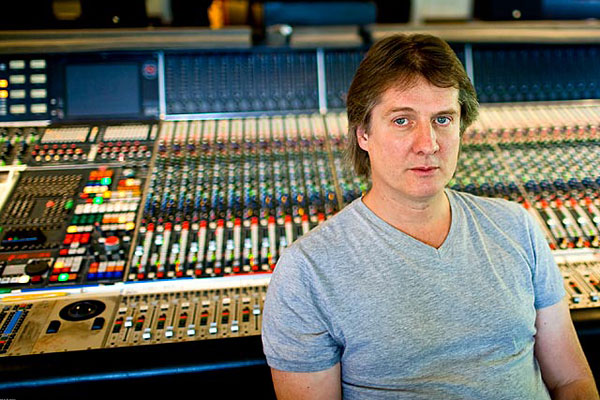
Listen to the interview 
Recorded
Dec. 17, 2000
Aired
Jan. 14 & 21, 2001
Interviewed by
Craig Bailey
Andy Jackson online
www.tubemastering.com